
Labubu vs Monchhichi: 1974 Origins, Vinyl Faces and Formats
Compare Labubu and Monchhichi using official Sekiguchi and POP MART records: 1974 vs 2015 origins, soft-vinyl parts, and exact product formats.
Treating every soft-bodied, vinyl-faced bag charm as the same character leads to wrong collection records and mismatched edition lookups. Monchhichi and Labubu are independent character brands created in different decades by different makers. Monchhichi was launched in 1974 by the Japanese toy manufacturer Sekiguchi with a plush body and soft-vinyl face, hands and feet; Labubu was created by Kasing Lung for his 2015 The Monsters picture-book world and is produced in multiple collectible formats by POP MART. Monchhichi is not a new version of Labubu, and neither character is a spin-off or sub-line of the other.
When comparing Labubu vs Monchhichi, separate the brand’s origin timeline from the construction format of the specific item in front of you. Sekiguchi’s official Monchhichi profile documents a 1974 debut built around a plush body with soft-vinyl (sofubi) face, hands and feet [1, 2], whereas POP MART’s official introduction dates Kasing Lung’s The Monsters picture-book world to 2015 and offers Labubu across vinyl-plush pendants, larger vinyl-plush dolls, hard figures and accessories [4, 5]. Because sizes, materials, hanging hardware and age labels change by edition—such as POP MART US product 1372 measuring 8 × 7 × 15 cm with a 60% PVC / 40% polyester shell and an age-15 threshold [5]—always record the exact series title and regional product listing before cataloguing a piece.
This guide compiles primary Japanese manufacturer records from Sekiguchi alongside official POP MART product pages so collectors can tell the two characters apart and log individual releases accurately. It makes no claim about copying, ranks neither brand by popularity or resale value, and does not authenticate individual items. kasingleung.com is an independent, unofficial reference site unaffiliated with Kasing Lung, POP MART or Sekiguchi. For a general introduction to Kasing Lung’s character, start with the Labubu overview.
Labubu vs Monchhichi at a glance: official source matrix
Scroll horizontally if columns extend beyond the table.
| Comparison dimension | Labubu (The Monsters / POP MART) | Monchhichi (Sekiguchi) | Why it matters for identification |
|---|---|---|---|
| Creator & origin year | Created by artist Kasing Lung in 2015 for three The Monsters picture books inspired by Nordic mythology [4] | Launched in 1974 by Tokyo manufacturer Sekiguchi Co., Ltd. following its 1954 soft-vinyl technology and 1972 Kuta Kuta plush line [1, 2] | Proves the two characters originated 41 years apart in distinct creative traditions. |
| Name meaning / lore context | Named as the most prominent mischievous, kind-hearted monster in The Monsters fairy world [4] | Portmanteau of French Mon (“my”) and Petit (“small cute thing”), meaning “my cute thing” [1] | Separates Nordic picture-book folklore from Sekiguchi’s French-inspired brand naming. |
| Signature facial & body cues | High pointed ears and serrated teeth; vinyl face paired with plush body on vinyl-plush editions [4, 5] | Freckles, trademark bib or ribbon, and right hand holding a pacifier that fits into the mouth; plush body with soft-vinyl face, hands and feet [1, 3] | Ears, teeth and hand/foot construction separate the two silhouettes immediately. |
| Product & packaging formats | Sold across blind-box vinyl-plush pendants, larger vinyl-plush dolls, hard PVC/ABS figures, MEGA editions and accessories [4, 5, 6] | Sold primarily as open-choice sized plush dolls (such as S size) and ball-chain keychains, plus a specific 2026 blind-box carabiner series [7, 8, 9] | Prevents assuming all Monchhichi items are blind boxes or all Labubu items are plush pendants. |
| Concrete edition example | THE MONSTERS - Have a Seat Vinyl Plush Blind Box (US ID 1372, released July 12, 2024; 8 × 7 × 15 cm; shell 60% PVC, 40% polyester) [5] | Matcha Monchhichi S Boy (H19 × W13 × D7.5 cm) vs Keychain Girl (H15 × W8.5 × D5.5 cm); Colorful Fantasy blind box (item 263448, H13.5 × W8.5 × D5.5 cm) [7, 9] | Shows why exact dimensions, hardware and packaging must be checked on the specific release entry. |
| Age suitability & care record | US product pages 1372 and 675 state “Not suitable for persons under 15”; physical care instructions not stated on those US pages [5, 6] | Age warning not stated on the general brand overview (verify on the unit’s box); official Q&A recommends surface dab-washing with diluted neutral detergent [1, 10] | Appearance as a soft keychain does not make an item a young child’s toy or machine-washable. |
All table entries reflect official brand and manufacturer pages checked on October 17, 2026. Unknown or unstated product parameters must be verified on the physical box or regional listing.
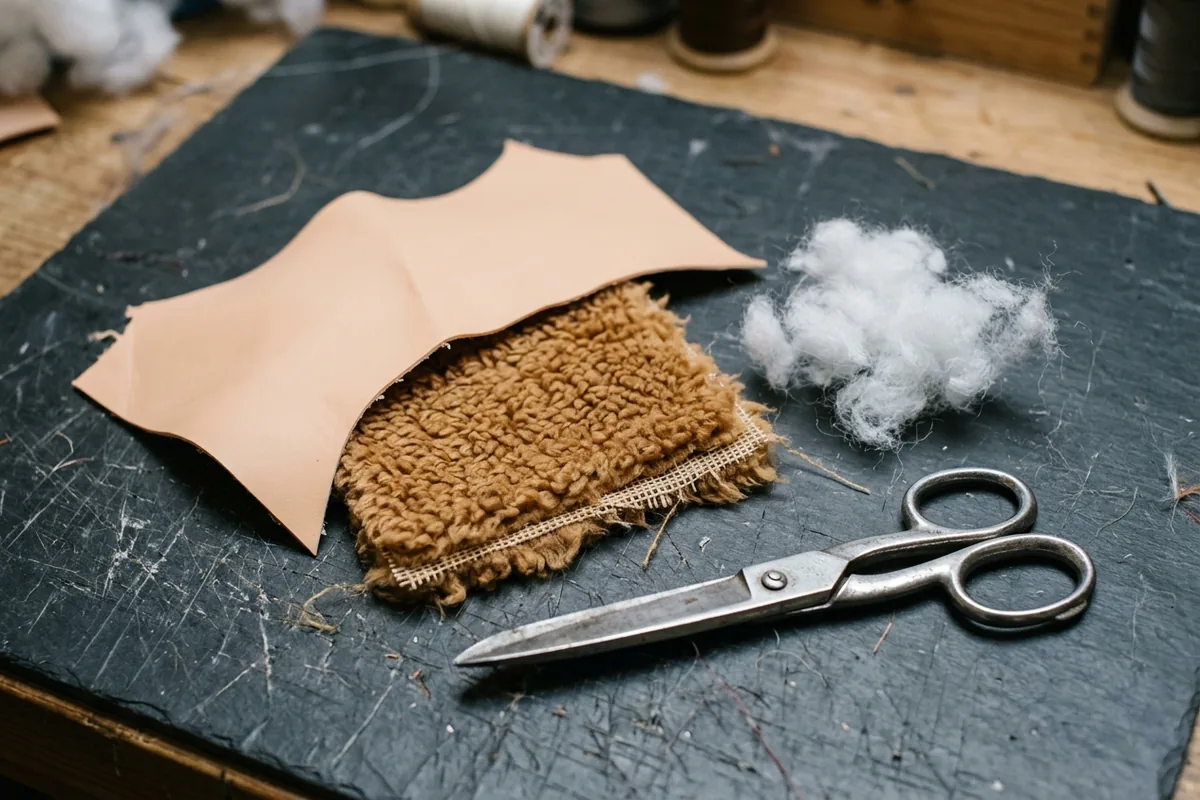
The workshop material samples above illustrate the physical contrast between smooth molded vinyl and pile textiles; they are generic reference materials, not components from either manufacturer.
How do the 1974 Sekiguchi origin and 2015 The Monsters origin differ?
Monchhichi originated in 1974 as a Japanese soft-vinyl-and-plush character from Sekiguchi, whereas Labubu originated in 2015 as a picture-book monster created by Kasing Lung. Recent social-media trends that group both characters together as handbag charms reverse or blur that chronology.
Sekiguchi’s official corporate history (Enkaku) and brand introduction trace Monchhichi through a documented manufacturing lineage in Tokyo [1, 2]:
- 1918 and 1954 manufacturing foundation: Founded in Tokyo in 1918 as Sekiguchi Celluloid Processing Workshop, the company completed and commercialized its soft-vinyl (soft vinyl / sofubi) molding technology in 1954 [2].
- 1972–1974 doll development: Sekiguchi released its Kuta Kuta plush series in 1972 and Mademoiselle Gege in 1973 before launching Monchhichi in 1974 [1, 2].
- 1975–1996 international cycle: Exports began in 1975—starting with Austria and German-speaking regions—followed by a temporary suspension of sales outside Paris from 1985 until fan demand prompted a 1996 relaunch in New York, Germany and Japan [1, 2].
- 2004 and 2024 milestones: Sekiguchi introduced Bebichhichi for the 30th anniversary in 2004 and marked Monchhichi’s 50th anniversary in 2024 [1, 2].
By contrast, POP MART’s official THE MONSTERS IP introduction states that illustrator Kasing Lung created a fairy world in three picture books inspired by Nordic mythology in 2015, populating that world with magical characters called The Monsters [4]. Labubu is one character within that cast alongside figures such as Zimomo and Tycoco, which you can compare in the The Monsters character guide and the Labubu origin story.
Takeaway: Treat 1974 (Sekiguchi’s Monchhichi launch) and 2015 (Kasing Lung’s The Monsters picture-book world) as independent origin records rather than comparing one brand as an imitation or update of the other.
How do soft-vinyl and plush features differ between Monchhichi and Labubu?
Standard Monchhichi dolls combine a plush body with a soft-vinyl face, hands and feet in a pacifier-holding pose, while Labubu’s signature cues are tall pointed ears and a serrated grin across both vinyl-plush and all-vinyl formats.
On its official About Monchhichi and Standard Character pages, Sekiguchi defines the classic construction and character details for Monchhichi-kun (boy) and Monchhichi-chan (girl), who share an official January 26 birthday [1, 3]:
- Hybrid body and limb materials: The torso is a soft stuffed plush body (nuigurumi), while the face, hands and feet are molded from soft vinyl (sofubi) [1].
- Pacifier pose (oshaburi pose): The right soft-vinyl hand holds an attached pacifier (or thumb/pacifier piece on specific editions) that can be inserted into the molded mouth opening [1, 3].
- Facial and outfit markers: Both standard characters feature facial freckles (sobakasu) and a trademark bib (sutai), with Monchhichi-chan adding a trademark head ribbon [3].
Labubu’s visual identity is defined by character traits rather than a single hybrid body blueprint. POP MART’s official character profile highlights high, pointed ears and serrated teeth [4]. While the viral bag-charm releases use a vinyl face attached to a plush body—which POP MART titles either Vinyl Plush or Vinyl Face—Labubu is also produced as solid PVC/ABS art figures without any plush fabric [4, 5, 6]. When a collector says “vinyl-faced plush,” that phrase describes a shared construction category used by both brands, not a shared character design. For another brand comparison where tooth shape is the primary visual cue, see our Labubu vs Fuggler guide.
Why must product formats and blind-box rules be checked by exact edition?
Neither Labubu nor Monchhichi uses a single size, material ratio, hanging clasp or packaging method across its entire catalog. Generalizing all Labubu items as 15 cm bag charms—or assuming Monchhichi is never sold in blind boxes—contradicts the manufacturers’ own product listings.
Labubu format variations in official POP MART records
POP MART’s storefront divides The Monsters into distinct categories including Plush Pendant, Plush Dolls, Art Figures, MEGA and Accessories [4, 5]. Even between two well-known vinyl-face blind-box series, the official specifications differ by series and regional storefront:
- THE MONSTERS - Have a Seat Vinyl Plush Blind Box (POP MART US product 1372): Listed with a release date of July 12, 2024, dimensions of 8 × 7 × 15 cm (3.15 × 2.76 × 5.91 inches), a shell of 60% PVC and 40% polyester, and stuffing of 70% polyester, 20% ABS, 5% iron wire and 5% nylon [5]. For the six regular character names and the Duoduo secret replacement rule, see the Have a Seat series record.
- THE MONSTERS - Exciting Macaron Vinyl Face Blind Box (POP MART US product 675 vs Singapore listing): The US page lists a release date of October 27, 2023, a height of 6.7 inches, a material line of ABS/PVC, and a whole set of 6 non-repeating blind boxes [6]. POP MART’s Singapore page for the same series lists height as about 17 cm and materials as 45% polyester, 55% PVC—demonstrating why collectors should record the regional storefront alongside the product ID. You can check the individual figure names on the Exciting Macaron names and labels page and review the wider category breakdown on the Labubu types and formats guide.
Monchhichi format variations in official Sekiguchi listings
Media articles about the bag-charm trend sometimes describe Monchhichi either as purely open-stock nostalgia dolls or as another blind-box craze. Sekiguchi’s official Goods catalog shows that format depends on the exact release [7, 8, 9]:
- Standard S-size plush vs standard keychain (Matcha Monchhichi, goods ID 241): Within a single release announcement, Sekiguchi lists the Matcha Monchhichi S Boy as a standalone doll measuring approximately H19 × W13 × D7.5 cm, alongside the Matcha Monchhichi Keychain Girl measuring approximately H15 × W8.5 × D5.5 cm [7].
- Mini ball-chain keychains (Monchhichi Keychain Mini Beige, goods ID 218): Listed as palm-sized mini figures (H10 × W7.5 × D4 cm for the boy; H11 × W7.5 × D4 cm for the girl) fitted with a metal ball chain (ball chain tsuki) rather than a carabiner ring [8].
- First official Monchhichi blind box (Monchhichi Colorful Fantasy, item 263448, goods ID 243): Scheduled for general release starting July 3, 2026, Sekiguchi explicitly describes this series as Monchhichi’s first blind box (“Monchhichi” hatsu to naru buraindo bokkusu) [9]. Each sealed individual box (H15 × W10 × D8 cm) holds an aluminum foil bag containing a keychain-sized boy Monchhichi (H13.5 × W8.5 × D5.5 cm) with a flat woven loop and round carabiner across 6 custom colors (including 1 secret color), sold singly or in a 6-piece complete box [9].
Takeaway: Never use “blind box” or “keychain” as a brand-level definition—record whether the specific Monchhichi or Labubu item is an open-box doll, a ball-chain mascot, or a sealed blind-box carabiner pendant.
5-step edition verification checklist for collectors
When a secondhand listing, social-media clip or gift request refers vaguely to a “Monchhichi Labubu doll” or “vinyl-face bag charm,” run through this five-step check before recording or buying the item:
- Check the ear, tooth and hand anatomy first: High pointed ears and a nine-tooth serrated grin indicate a Labubu (The Monsters) design [4]; rounded monkey-like ears, facial freckles, a bib and a soft-vinyl hand holding a pacifier indicate Sekiguchi’s Monchhichi [1, 3].
- Copy the full printed series title and item code: Record the exact English or Japanese product name and number—such as POP MART US product
1372(Have a Seat Vinyl Plush Blind Box) [5] or Sekiguchi item263448(Monchhichi Colorful Fantasy) [9]—rather than generic seller tags. - Note the suspension hardware and packaging type: Specify whether the piece has no hanging loop (shelf doll), a metal ball chain, or a stitched ribbon loop with a spring ring, and whether it is sold open-choice or in a sealed foil blind bag [5, 7, 8, 9].
- Check the age label on the specific regional listing or box: POP MART US product pages
1372and675explicitly state “Not suitable for persons under 15” [5, 6]. Do not assume a soft plush pendant is rated for young children; see our Labubu age-rating and label guide for details. For Monchhichi, check the age marking printed on the specific product’s retail packaging. - Follow brand-specific care and verification routes: Sekiguchi’s official Q&A advises against machine-submerging Monchhichi, recommending gentle surface dabbing with a towel moistened in diluted neutral detergent followed by shade drying [10]. For authenticity questions on an item sold as Labubu, use the official verification workflow covered in our real vs fake Labubu guide.
Frequently asked questions
What does the name “Monchhichi” mean?
According to Sekiguchi’s official About Monchhichi page, the name Monchhichi combines the French words Mon (“my”) and Petit (“something small and cute”) to convey the meaning “my cute thing” (watashi no kawaii mono) [1].
Is Monchhichi made by POP MART or related to Labubu?
No. Monchhichi is created and manufactured by the Tokyo-based company Sekiguchi Co., Ltd., which launched the character in 1974 [1, 2]. Labubu was created in 2015 by artist Kasing Lung for The Monsters and is produced under license by POP MART [4].
Are all Monchhichi dolls sold in blind boxes like Labubu pendants?
No. Most Monchhichi releases—such as standard S-size dolls and mini ball-chain keychains—are sold as open-selection items where you choose the exact boy or girl design [7, 8]. Sekiguchi announced its first Monchhichi blind-box series, Monchhichi Colorful Fantasy (item 263448), for July 2026 [9].
Method and sources
This guide was compiled on October 17, 2026 from primary Japanese manufacturer pages published by Sekiguchi Co., Ltd. and official English product and brand pages published by POP MART. Search demand and SERP gaps were reviewed against US English queries (labubu vs monchhichi, monchhichi vs labubu, labubu doll vs monchhichi), where existing lifestyle coverage focused on celebrity bag-charm trends rather than side-by-side manufacturer records.
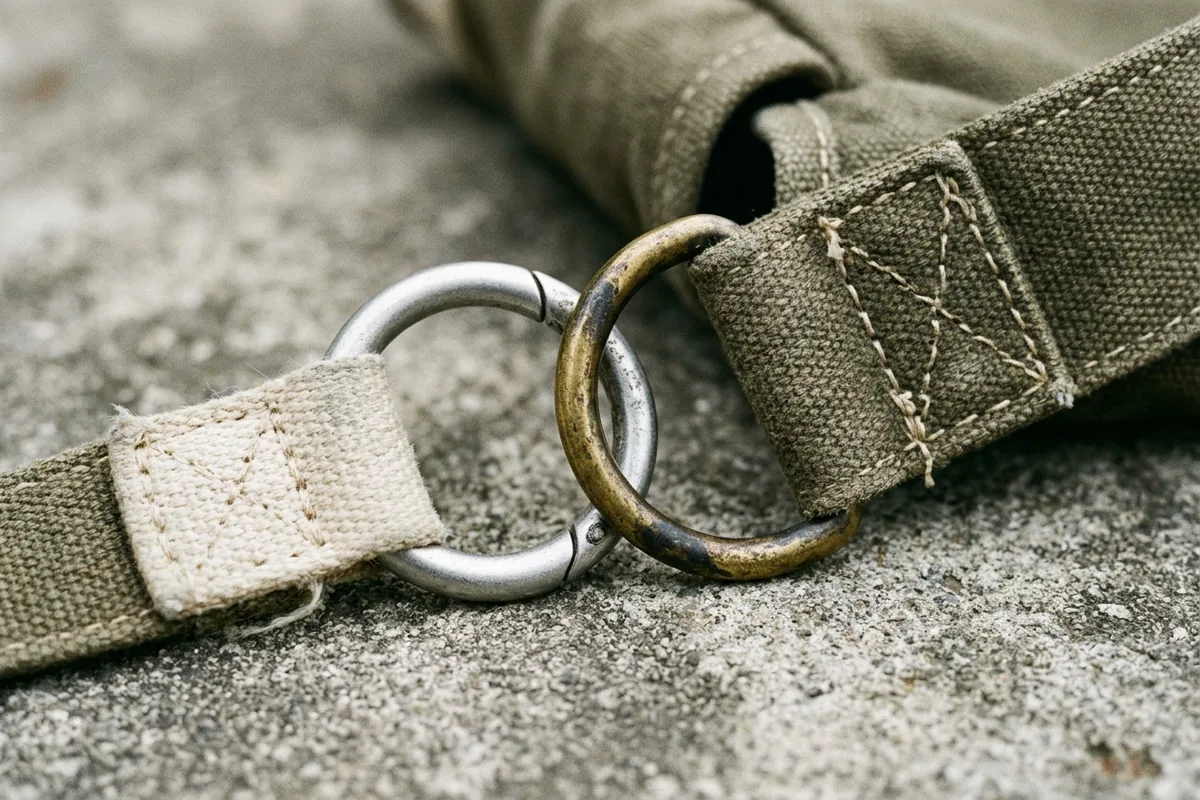
Scope limitations: We did not conduct physical laboratory testing, material destructive analysis, or retail price audits. Dimensions and material percentages apply strictly to the cited product IDs and regional storefronts (popmart.com/us and monchhichi.co.jp). The documentary workshop photographs illustrate generic soft-vinyl/plush textures, clasp hardware and storage tools; they do not depict copyrighted characters or official brand merchandise.
- Monchhichi Official Site (Sekiguchi) — About Monchhichi (モンチッチとは), first section and Naming Origin (Naming no Yurai). Accessed October 17, 2026. Supports the 1974 Sekiguchi launch, plush body with soft-vinyl face/hands/feet, 1975 export start, 1985–1996 pause/relaunch outside Paris, 2024 50th anniversary, and French Mon + Petit name origin.
- Sekiguchi Co., Ltd. — Corporate History (沿革), timeline entries for 1918, 1954, 1972, 1973, 1974, 1975, 1976, 1996 and 2004. Accessed October 17, 2026. Supports the 1954 soft-vinyl technology milestone, 1972 Kuta Kuta series, 1974 Monchhichi birth, and 1975 Austria/German-region export debut.
- Monchhichi Official Site (Sekiguchi) — Standard Characters (スタンダード), character point callouts and birthday table. Accessed October 17, 2026. Supports Monchhichi-kun and Monchhichi-chan January 26 birthdays, freckles, trademark bib/ribbon, and right-hand pacifier feature.
- POP MART GB — THE MONSTERS IP Characters introduction, IP Characters / THE MONSTERS section. Accessed October 17, 2026. Supports Kasing Lung’s 2015 Nordic mythology picture-book origin for The Monsters, Labubu’s high pointed ears and serrated teeth, and product categories.
- POP MART US — THE MONSTERS - Have a Seat Vinyl Plush Blind Box (Product 1372), Product Details section. Accessed October 17, 2026. Supports July 12, 2024 release date, 8 × 7 × 15 cm dimensions, shell (60% PVC, 40% polyester) and stuffing (70% polyester, 20% ABS, 5% iron wire, 5% nylon) composition, and “Not suitable for persons under 15” label.
- POP MART US — THE MONSTERS - Exciting Macaron Vinyl Face Blind Box (Product 675), Product Details section (compared with cached POP MART Singapore listing). Accessed October 17, 2026. Supports October 27, 2023 US release date, 6.7-inch height, ABS/PVC material line, 6 non-repeating blind boxes, and age-15 notice.
- Monchhichi Official Site (Sekiguchi) — Matcha Monchhichi S Boy & Keychain Girl (goods ID 241), lineup specifications. Accessed October 17, 2026. Supports S-size boy dimensions (approx. H19 × W13 × D7.5 cm) vs keychain girl dimensions (approx. H15 × W8.5 × D5.5 cm).
- Monchhichi Official Site (Sekiguchi) — Monchhichi Keychain Mini Beige Boy & Girl (goods ID 218), lineup specifications. Accessed October 17, 2026. Supports mini ball-chain keychain format (approx. H10–11 × W7.5 × D4 cm).
- Monchhichi Official Site (Sekiguchi) — Monchhichi Blind Box “Monchhichi Colorful Fantasy” (goods ID 243, item 263448), product specification block. Accessed October 17, 2026. Supports Sekiguchi’s statement that this July 3, 2026 release is Monchhichi’s first blind box, with H13.5 × W8.5 × D5.5 cm body, woven loop + round carabiner, and 6 colors (including 1 secret) in foil bags.
- Monchhichi Official Site (Sekiguchi) — Frequently Asked Questions (よくある質問), care and overseas naming entries. Accessed October 17, 2026. Supports surface dab-washing care instructions with diluted neutral detergent and shade drying.