
Real vs Fake Labubu: Official Checks and Their Limits
A convincing box can conceal the wrong toy. Check POP MART's official route and put box, tag, foot and teeth clues in context.
A convincing box can leave you paying for the wrong item. Start a real vs fake Labubu check with POP MART’s official authenticity instructions, then consider the item and its purchase history together.
For a POP MART Labubu, the useful question is what evidence belongs to the item you are checking. A seller’s photograph, a familiar face or a reassuring scan message leaves different things unresolved. This guide separates the official code-check route from dated media observations about boxes, tags, feet and teeth, and gives you a record to take to official customer service. kasingleung.com is an independent fan resource and does not authenticate individual objects.
- Use the verification link supplied by POP MART itself.
- Match observations to the complete series and product format.
- Treat appearance as a reason to investigate, rather than a certificate.
- Keep the packaging, result and purchase record together.
Match the item to its series
Begin by identifying what you have. Write down the full series name, product format and purchase region before comparing photographs. Our Labubu formats guide separates figures, plush pendants and larger display pieces; a detail discussed for a pendant is not automatically a rule for another format.
For example, our Big Into Energy reference distinguishes the pendant series from another product using the same series words. Use the full product name when asking a seller for information. A nickname alone makes it harder to tell which reference image is relevant.
Make a short record:
- Copy the series and format from the listing or box.
- Note where and when the item was purchased, if known.
- Record whether the box, tags and purchase receipt are still available.
- Keep the listing photos separately from photos of the item in your possession.
This is a way to organize your question, not an authentication test. If you need to distinguish the character from others in the same world, the Labubu overview and The Monsters cast guide provide that background.
Takeaway: Compare the same series and format before interpreting a small visual difference.
Use POP MART’s official code-check route
POP MART’s US help page provides these box-label instructions. It links directly to m-gss.popmart.com/us#/.
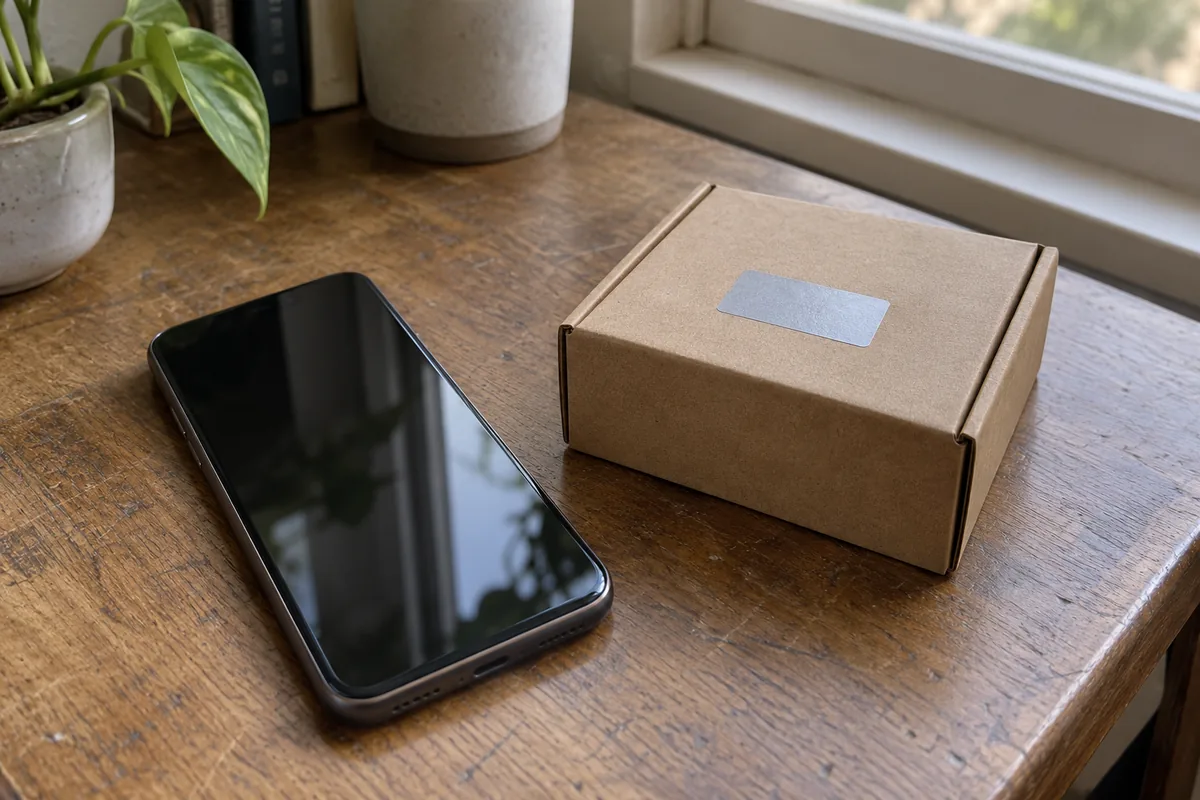
Use the help page as your starting point:
- Scratch the coating on the box label to reveal the verification code.
- Open the verification link from the official help page and select “QR Verify”. Check the address before entering anything.
- Enter the code and select “Verify”.
- Keep the result, date and item record together.
A label photographed in an advert is not the label you can inspect in person. Ask which item the image belongs to; keep that question separate from whether the image shows an official page. A screenshot also leaves you unable to inspect the live address or reproduce the check yourself.
Common mistake: Accepting a seller’s verification screenshot as the whole purchase record. Ask how the photographed code, box and offered item are connected.
Our official-channel FAQ explains the difference between POP MART’s website and sites whose names merely include “Labubu”.
Takeaway: Reach the checker from POP MART’s own instructions, and retain evidence of your own check.
Read the result together with the purchase record
The official help page lists three responses beginning “QR code scan result is genuine”, followed by the scan-history wording below. This table explains those responses only; it does not interpret other messages or assess your object.
Scroll horizontally if columns extend beyond the table.
| Scan-history wording after the genuine response | POP MART’s explanation |
|---|---|
| First scan | A genuine result on the first verification |
| Multiple scans | A genuine result; the code was checked previously |
| Exceeded maximum scan count limit | A genuine result; the code has been checked more times |
A repeat result is not, by itself, described there as a counterfeit result. For verification problems, POP MART directs readers to its customer service.
A purchase record can help explain how the box and item are connected. If it is missing, record that gap rather than treating it as proof of a counterfeit. ABC News/GMA, August 12, 2025, reported a scam involving genuine boxes reused around counterfeit toys. This is why checking packaging and establishing what is inside it are different questions.
If the response surprises you, save the exact message and ask the seller about the item’s history. Do not substitute your own explanation for an unfamiliar result. A useful note is “this is what appeared when I checked this label”, accompanied by the live address and purchase details. That gives official support something specific to review without turning uncertainty into an accusation.
Takeaway: Record the result accurately; investigate any mismatch between that result and the item offered.
Compare the box, tag, feet and teeth
These reports concern plush products: ABC News/GMA compared a plush keychain with a counterfeit example, while BBC Bitesize discusses plush dolls. Their observations do not provide specifications for hard display figures or every release. The table identifies each publisher and date. Use it to decide what to photograph or ask about; it does not give a pass/fail score for your item.
Scroll horizontally if columns extend beyond the table.
| Area | Published observation and date | How to use it carefully |
|---|---|---|
| Box surface and sticker | BBC Bitesize, updated September 2025, describes matte boxes, restrained colours, a holographic sticker and QR code. | Compare with the relevant product reference; a finish or sticker alone does not settle the question. |
| Tag and stitching | ABC News/GMA, August 12, 2025, showed tag spelling errors and uneven stitching in its counterfeit example. | Photograph the wording and seam. This observation is about the reported example, not a universal tag specification. |
| Painted details | ABC News/GMA, August 12, 2025, quotes POP MART on careful sculpting and paint, identifying sloppy or chipped details as warning signs. | Keep a clear close-up for a follow-up question rather than declaring a verdict from a blemish. |
| Teeth | BBC Bitesize, updated September 2025, describes nine triangular teeth; ABC News/GMA’s August 12, 2025 comparison also mentions nine. | A matching count is only a matching appearance detail. |
| Foot attribution | ABC News/GMA, August 12, 2025, reports POP MART’s account of enhanced features in 2024 releases, including an engraved tag and artist name on the foot; its tag and attribution discussion is series-dependent. | Retain the date and release context; do not apply it to every earlier item. |
| UV foot detail | BBC Bitesize, updated September 2025, says newer editions have a UV-visible silhouette seal on the right foot. | “Newer editions” is not a series-by-series specification; absence alone cannot establish a counterfeit. |
Take photographs under ordinary light first. Keep the whole object in one image and use additional close-ups for the area that concerns you. Avoid editing colours or contrast in the version you send for review; preserve the original alongside any annotated copy. This is a practical recording suggestion, not a manufacturer requirement.
Common mistake: Turning a checklist into a certificate. Passing several visual checks does not resolve whether the packaging, code and object belong together.
The format reference helps you choose a relevant comparison. The character’s origin story answers a separate meaning of “original”: the design’s history, rather than the authenticity of an individual toy.
Takeaway: Keep every appearance clue attached to its source and release context.
When this does not apply
This guide covers the published US box-label instructions and the limited observations cited above. It does not establish one label design for every region, year or format. Earlier editions, unboxed second-hand items and products without a readable label may need a different inquiry.
There is no series-specific rule here for Big Into Energy, Coca-Cola or Stitch collaborations. Do not infer one from a generic online checklist. Use the series-name reference to identify the item, then ask official support about the actual release if a detail remains unclear.
If the official interface changes, follow the current help page. Do not guess a missing code, recreate a damaged label or treat a generic camera failure as an authentication outcome. Record what remains available and what is missing.
Our About page explains this publication’s independent role. We cannot inspect, certify or adjudicate a purchase for you.
Takeaway: An incomplete check is a reason to ask for help, not a reason to invent a conclusion.
Prepare a record for official customer service
For a US purchase, use the Customer Service section of POP MART’s US Contact Us page. The page specifies North America; for another region, use that region’s official support route. Keep enough context to explain the issue without sending a scatter of unlabeled photographs. The following is a suggested personal record, rather than a list of documents the company promises to require or accept.
Scroll horizontally if columns extend beyond the table.
| Record to keep | Why it helps explain the question |
|---|---|
| Full series name and format | Identifies the product you are discussing |
| Seller, order details and purchase date | Connects the object to the transaction |
| Box and tag photos | Shows the packaging and label available to you |
| Whole-item and detail photos | Places the concern in context |
| Exact verification response and page address | Shows what happened during the check |
| Missing or damaged materials | Explains why you could not complete a step |
Send private purchase or code details through the official support channel rather than posting them publicly. State the question plainly: what you bought, which step you completed and which detail remains unresolved. If the item is still with a seller, explain that distinction too.
Our FAQ on authentication requests sets out why sending pictures to this fan site cannot replace official assistance. Keep the original listing and correspondence while deciding how to proceed with the seller; this guide does not promise a refund or a particular support decision.
Takeaway: Give official support a connected record of the item, transaction and check.
FAQ
What does a real Labubu look like?
Find the full series and format in the official listing, then choose the pictured design. For example, POP MART’s Big Into Energy pendant page provides named design images. Use the matching reference, not an unrelated pendant photo; resemblance alone does not authenticate the item.
Why isn’t my Labubu QR code scanning?
Separate an unreadable QR pattern from an unreadable verification number. If the number on the box label is legible, the manual-check steps avoid relying on the camera reading the pattern. A camera failure alone does not explain the cause or establish authenticity.
How can I fix an unreadable QR code?
If the verification number is also illegible, manual entry cannot be completed from that label. Keep it intact and photograph the damage, with another image showing where the label is attached. Ask official support about that situation rather than reconstructing missing marks or guessing digits.
If a Labubu head turns, is it fake?
Identify the exact series and ask official support about that product’s construction. Head movement alone leaves the authenticity question unresolved. Avoid forcing the mechanism to reproduce a video demonstration; describe the movement you observed and include the product name in your inquiry.
How much is a real Labubu?
Consult the exact official product listing for current pricing and use the buying-channel FAQ to find the official starting point. Keep pricing separate from the appearance checks: an advert’s price does not establish the identity of the object you receive.
Where can I buy Labubu?
Our official-channel FAQ handles that question. Check a sales channel independently before paying; a shop’s name or a verification image is not enough to connect a specific listing to official stock.
Method and sources
This guide brings together POP MART’s published US instructions and named media reporting. Appearance observations retain the publishers’ dates and limits. The diagrams show the inspection steps in those instructions. Authenticate an item through POP MART’s own route.
- POP MART US — Authenticity Check, accessed October 9, 2026. Primary source for the manual route and result descriptions.
- POP MART US — Contact Us, accessed October 9, 2026. Customer Service entry for North America.
- POP MART US — Big Into Energy pendant listing, accessed October 9, 2026. Example of matching a full product name to design reference images.
- ABC News/GMA — How to spot a fake Labubu: Pop Mart’s advice for getting the real deal, August 12, 2025; accessed October 9, 2026. Reporting with POP MART comments and a sample comparison.
- BBC Bitesize — Is your Labubu fake?, updated September 2025; accessed October 9, 2026. Media descriptions of packaging and physical clues.
Takeaway: Official instructions explain the check; dated media clues help frame follow-up questions.
Related reading
- Labubu overview — Place the character and merchandise in context.
- Labubu types and formats — Identify which kind of object you are comparing.
- Big Into Energy names and formats — Record that series without relying on a nickname.
- Official channels and this site’s role — Separate purchasing and support from this independent resource.